

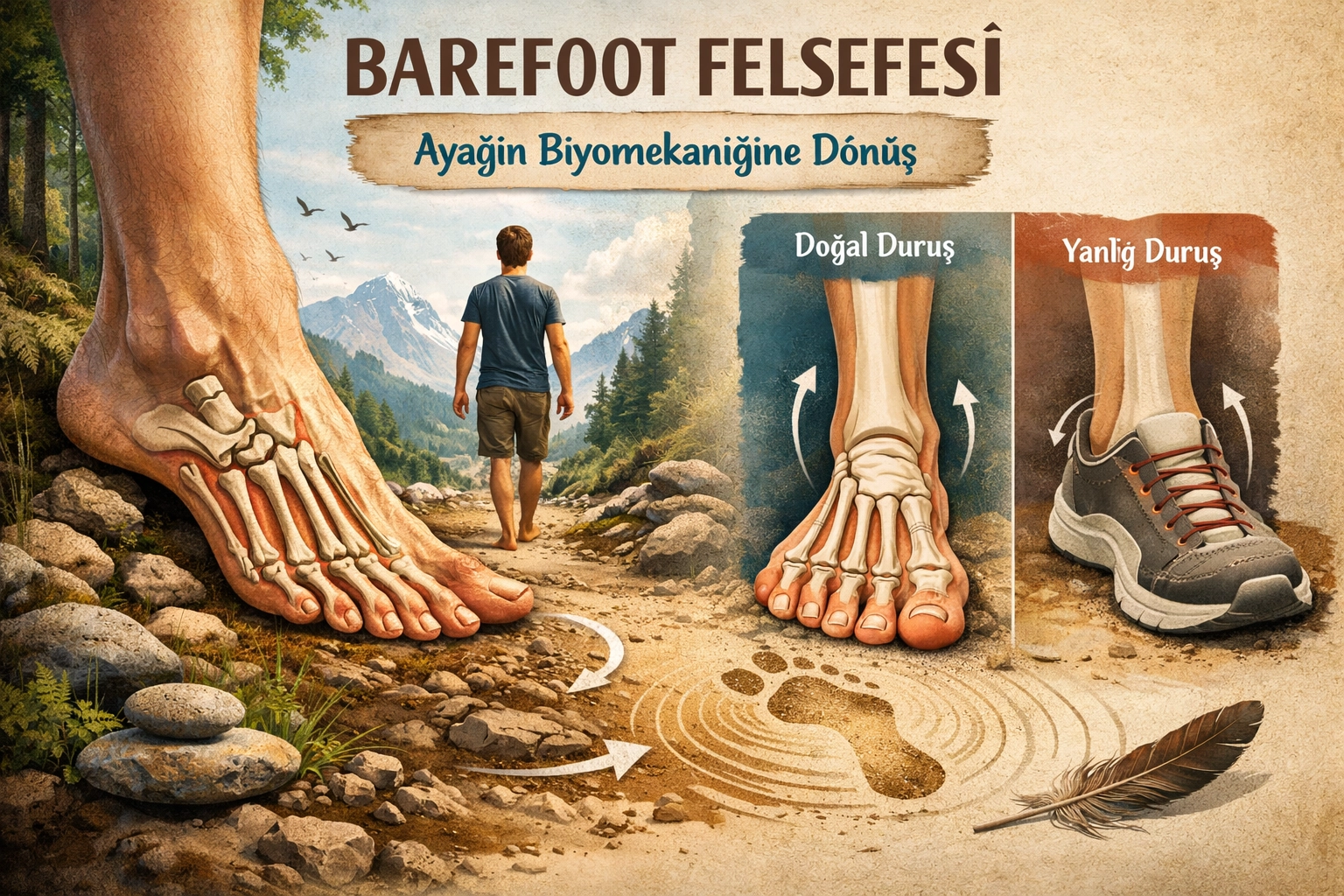
A Holistic Approach Based on Grounding and Vibration
Modern life—due to hard surfaces, synthetic materials, and high cognitive load—can distance the human body from its evolutionary adaptations.
Returning to natural biomechanics with minimalist barefoot shoes
This text is addressed from a physiological and holistic perspective.
1. The Barefoot Philosophy: Returning to Foot Biomechanics
Minimalist shoes are designed to support the natural anatomy of the foot and its proprioceptive capacity. Core design principles include:
Zero Drop
The heel and forefoot are positioned at the same level. This structure may:
- Support more balanced function of the posterior chain (gastrocnemius–soleus–hamstring line)
- Reduce the risk of excessive anterior pelvic tilt
Wide Toe Box
Supports metatarsal spread.
- May help reduce risk factors for hallux valgus
- Enables active participation of the toes in stability
Thin & Flexible Sole
Activates mechanoreceptors.
- Enhances proprioception (ground awareness)
- Supports activation of intrinsic foot muscles
Traditional shoes with elevated heels and narrow toe boxes may lead to muscle passivity and altered load distribution over time. In contrast, minimalist design encourages a more active musculoskeletal system.
2. Leather Sole and Grounding (Earthing)
The grounding approach suggests that contact between the body and natural surfaces may contribute to biophysical regulation.
Natural leather soles:
- Provide a more organic interface compared to synthetic insulating materials
- Enhance ground feel when sufficiently thin
However, conductivity and potential biophysical effects depend on variables such as:
- Moisture levels
- Surface type (soil, grass, stone)
- Sole thickness
Current scientific literature on grounding is limited, and no strong consensus has yet been established. Therefore, it should be considered a supportive lifestyle practice rather than a definitive intervention.
3.Transitioning to Barefoot: The Adaptation Process
A sudden transition is not recommended. Muscles and tendons require time to adapt.
Suggested adaptation protocol:
- Short-duration walks during the first week
- Prefer natural surfaces over hard asphalt
- Intrinsic muscle strengthening exercises (short foot, towel curls)
- Calf and plantar fascia mobilization
Mild DOMS (delayed onset muscle soreness) is normal.
In cases of sharp, localized, or persistent pain, usage should be reduced.